Showing posts with label writing. Show all posts
Showing posts with label writing. Show all posts
Wednesday, April 18, 2007
Dave Thomas of The Pragmatic Programmers on Writing
Dave Thomas, one of the guys behind The Pragmatic Programmers has a series of blog posts on Writing a Book. Given that he's a techie (like me) who has written a book or two himself (like I want to), and the books these guys publish are without a doubt some of the best in their class - so it seems to make sense to check these out.


Wednesday, February 28, 2007
Michael Crichton - State of Fear
Michael Crichton's latest book deals with the hype of global warming and mines it for an interesting storyline. Care of HarperCollins, here is a preview of the novel:
Wednesday, November 15, 2006
Six words to tell a story in ...
Wired set a group of well known writers a challenge, could they tell a story in six words or less?
 I've reproduced a few of my favourites:
They also created some interesting graphics to go with these micro-stories:

 I've reproduced a few of my favourites:
Computer, did we bring batteries? Computer?
- Eileen Gunn
Gown removed carelessly. Head, less so.
- Joss Whedon
Machine. Unexpectedly, I’d invented a time
- Alan Moore
Epitaph: Foolish humans, never escaped Earth.
- Vernor Vinge
Lie detector eyeglasses perfected: Civilization collapses.
- Richard Powers
K.I.A. Baghdad, Aged 18 - Closed Casket
- Richard K. Morgan
Dinosaurs return. Want their oil back.
- David Brin
Deadline postponed. Five words enough...?
- David Brin
Please, this is everything, I swear.
- Orson Scott Card
Finally, he had no more words.
- Gregory Maguire
Leia: "Baby's yours." Luke: "Bad news…"
- Steven Meretzky
They also created some interesting graphics to go with these micro-stories:

Saturday, September 02, 2006
Brust: Plot, a Bourgeous Luxury
So what does Steven Burst think about plot?
"The Thing That May Become A Book now has seven pages to it. Email still isn't working, for those who care. Also, I still don't have a plot, but that's okay; I've always felt plot to be a bourgeous luxury."
Friday, September 01, 2006
David Gemmell Dies, Age 57
 One of my favorite authors, David Gemmell died a few weeks ago, on the 28th July 2006. His death was due to coronary artery disease, probably brought on by his heavy smoking. Dying at age 57 is far too young, and cut short what could have been an even more prolific career as he came to complete his Troy series. His publisher said he was "writing at the peak of his powers".
Looking at the Wikipedia entry above, I realise that I've only ever read three of his series:
- Drenai Series:
This was the first of his series that I ever read, and the stirring heroes of individual brilliance still resonate with me. - Sipstrassi Series:
This series mixes Wild West with a post-apocalyptic world with linkages to lost Atlantis (the Drenai series actually has similar 'memories' of a lost technological civilization, although less obvious). I appreciate the religious gunfighter anti-hero much more now than I did when I first read these as a teenager. - Greek Series:
This 'alternate history' series is interesting, but has a disturbing twist on traditional Greek mythology. I have not re-read these since I first bought them, unlike the other series.
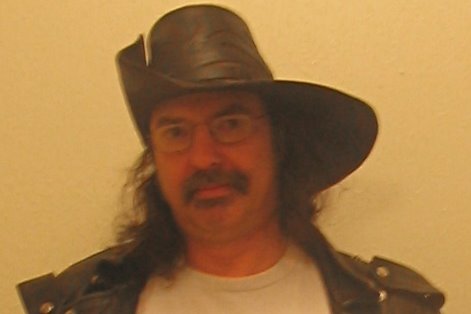 It is interesting for me to compare the heroes of Gemmell's worlds with main characters from another of my favorite authors, Steven Brust. Brust's series of books about his reluctant hero Vlad Taltos (assassin, witch, criminal boss, sorceror, psychic, human) and the Khaavren Romances set in the same world of Dragaera, have a very different style to Gemmell's work, but are similar in that they inhabit a consistent world over a long period of time, with the history in some books making reference to events from others, and a similar hint that this 'fantasy' world is simply in the future of our own.
Gemmell however has an unshaking belief in the ability of one man to sway a crowd of enemies, consistently his work shows single heroes standing off much larger groups due to their lack of fear and willingnes to die - which paradoxically guarantees their life.
Brust shows his heroes as far less effectual, for them the crowd will charge and not be stood off - the heroes will triumph through other means, often after an initial setback - usually through the bold application of their wits, or magic.
The difference may be put down to the backgrounds of the authors. Gemmell had a much more rough and ready youth, expelled from school for organising a gambling syndicate and working as a bouncer and then later a journalist. Brust is a musician and plays up his Hungarian descent, almost dressing as one of the characters from his books - he also likes poker. Gemmell was 6'4" tall and looked very much like one of his craggy heroes.
Anyway, as an aspiring writer, I like hearing where characters really come from, here is what Gemmell wrote in 1995 about the genesis of his Jon Shannow character for the Sipstrassi Series (emphasis mine):
Of the many characters I have created over the years, few have
captured the imagination of readers as powerfully as Jon Shannow, the Jerusalem Man.
Alan Fisher, the award winning author of 'Terioki Crossing', and a fan of the film Casablanca, has a phrase that sums up characters like Shannow. "They walk out of Rick's bar, fully formed and real. The author doesn't have to work on them at all. There is no concsious act of creation. One moment they don't exist- the next they stand before you, complete and ready."
I remember the moment Shannow walked out of Rick's bar. It was at the end of a miserable, wet day in Bournemouth at the start of autumn in 1986. I was the group managing editor of a series of newspapers stretching from Brighton to Portsmouth on the south coast. The previous week I had a call from my father to tell me that my mother was in hospiatl and that the surgeons feared she had terminal cancer. They were right. A year before she had suffered the amputation of her right leg, and fought back to make a dramatic entrance at the Christmas dance. This time there would be no fightback.
I had visited her in London, and then driven to Bournemouth for a business meeting, concluding it at around ten that night. I was staying in a small hotel of remarkable unfriendliness. The kind of place- as Jack Dee once said- where the Gideons leave a rope! I hadn't eaten since the previous evening and I called the night porter. He said the kitchen staff had gone home, but there was a plate of olives someone had left at the bar. Nursing the olives and a very large glass of Armagnac I returned to my room and opened the Olympia portable typewriter.
I was at the time preparing a Drenai novel, featuring the Nadir warlord Ulric, which my publishers had commissioned. According to the contract the book was to be called 'Wolf in Shadow' and was, lossely, a prequel to Legend. I had completed around sixty pages. They weren't good, but I was powering on as best I could.
Sitting by the window, looking out over Bournemouth's glistening streets, I tried to push the events of the week from my mind. My mother was dying, I was waiting to be fired, and staff, who had joined my team in good faith, were facing redundancy. After the fifth large Armagnac I decided to continue work on the book. I knew I was drunk, and I also knew that the chances of writing anything worthwhile were pretty negligible. But forcing my mind into a fantasy world seemed infintely more appealing than concentrating on the reality at hand.
The scene I was set to continue had a Nadir scout riding across the steppes. The intention was to follow him to the top of a hill and have him gaze down on the awesome army camped on the plains below. I focused on the typewriter keys and typed the following sentences...
'The rider paused at the crest of a wooded hill, and gazed down at the wide, rolling ampty lands beneath him. There was no sign of Jerusalem...'
The walls of the mind came crashing in as I typed the word 'Jerusalem,' thoughts, fears amd regrets spilling ver one another, fighting for space. There followed a bad hour, which even Armagnac could not ease. But after midnight I returned to the page and stared down at it. It called to me. Who is he, I thought? What is he looking for, the Jerusalem Man?
And suddenly he was there. Tall and gaunt, seeking a city that had ceased to exist three hundred years before. A lonely, tortured man on a quest with no ending, riding through a world of savagery and barbarism.
The story flowed in an instant, and I wrote until after the dawn. Through all the despair that followed in those next painful months I found a sanctuary in the company of Jon Shannow. Through his eyes I could see the world clearly, and understand how important it is to be strong in the broken places.
As a result Shannow will always be one of my favourite characters. For a while back here he was the best friend I'd ever had.
Here's to you David Gemmell, may you find the spiritual city that calls to you, and if you do, then save me a place at your table for a drink or two.
Friday, July 07, 2006
The Iron Code
I've been re-reading my Druss the Legend books this week, somehow I'm missing Legend, which is the first one I read (and the first written). One of my favorite bits of prose is the Iron Code that Druss is taught by Shadak, one of his first mentors:
I love the uncompromising quality of that code, the assumption is not that all fights will be won, but that no fights will be shirked. I would be the first to say that sometimes discretion is the better part of valour, but that is something that does not fit in the simple black-and-white world of Druss.
However, author David Gemmell is not soft on Druss, he admits that the courage of a father that backs down from a fight to protect his family may well be greater than the man that allows his ego to lead him into confrontation. So the code provides a moral compass for a character that admits it is not the only way to live - in Druss' terms he would simply see one rule for himself and another for others with different needs. Seeing Gemmell handle Druss as a father figure would have been interesting, but as he is first introduced facing his death it would require an alternate timeline to work.
Hmmm ... I'll have to see whether Gemmell makes any of his other heroic figures fathers.
“Never violate a woman, nor harm a child. Do not lie, cheat or steal. These things are for lesser men. Protect the weak against the evil strong. And never allow thoughts of gain to lead you into the pursuit of evil. Never back away from an enemy. Either fight or surrender. It is not enough to say I will not be evil. Evil must be fought wherever it is found.”
I love the uncompromising quality of that code, the assumption is not that all fights will be won, but that no fights will be shirked. I would be the first to say that sometimes discretion is the better part of valour, but that is something that does not fit in the simple black-and-white world of Druss.
However, author David Gemmell is not soft on Druss, he admits that the courage of a father that backs down from a fight to protect his family may well be greater than the man that allows his ego to lead him into confrontation. So the code provides a moral compass for a character that admits it is not the only way to live - in Druss' terms he would simply see one rule for himself and another for others with different needs. Seeing Gemmell handle Druss as a father figure would have been interesting, but as he is first introduced facing his death it would require an alternate timeline to work.
Hmmm ... I'll have to see whether Gemmell makes any of his other heroic figures fathers.
Monday, December 13, 2004
Postcyberpunk Detective Fiction
I've been recently re-reading the Moreau Omnibus by S. Andrew Swann. That got me thinking about some interesting topics:
Postcyberpunk Defined
Notes Toward a Postcyberpunk Manifesto
Detective Fiction Defined
Postcyberpunk Defined
Notes Toward a Postcyberpunk Manifesto
Detective Fiction Defined
Tuesday, November 23, 2004
Character Names
Names, names, names ... such important little things, especially when describing an imaginary character to an unknown person.
I have some favourite names. Falkayn is one. Drake is another. Both have been used by authors I like to describe characters I enjoyed. Both could be re-used, but that takes some of the fun out of the creative act.
Hermes is an interesting name, currently used for branding feminine accessories, yet a male name from Greek myth. Even then, the name is one from a story, one already tied up with an interesting character. Of course, many interesting names do have stories attached to them (often more than one) and that shouldn't stop us using a name that is a good fit with a character idea.
Sometimes a common name is good, Sir Arthur Conan Doyle's Sir Nigel Loring merges a common name with a more interesting one. His Sherlock Holmes merges two interesting names, and the way it felt when spoken was surely part of his reason for choosing them (Sir Nigel was from his more serious historical fiction).
For me, finding good names is always a difficult task. Most parents have wrestled with this problem, there are so many name books, and so many names to choose from. As parents you usually are restricted by your family name, which can be helpful. Although the advantage of a work of fiction is that you don't need to agree on the name with your spouse!
The other problem is the old chicken and the egg paradox. Do you start with the character or the name? For me it is a mix of both, a character idea will spark a name, which will help mold the character idea, which may end up requiring a different name.
I was planning on putting some sample names up here, but now I think of it, I want to explore some character, story and world ideas a bit more first.
Subscribe to:
Posts (Atom)