"The Thing That May Become A Book now has seven pages to it. Email still isn't working, for those who care. Also, I still don't have a plot, but that's okay; I've always felt plot to be a bourgeous luxury."
Saturday, September 02, 2006
Brust: Plot, a Bourgeous Luxury
So what does Steven Burst think about plot?


Friday, September 01, 2006
David Gemmell Dies, Age 57
 One of my favorite authors, David Gemmell died a few weeks ago, on the 28th July 2006. His death was due to coronary artery disease, probably brought on by his heavy smoking. Dying at age 57 is far too young, and cut short what could have been an even more prolific career as he came to complete his Troy series. His publisher said he was "writing at the peak of his powers".
Looking at the Wikipedia entry above, I realise that I've only ever read three of his series:
- Drenai Series:
This was the first of his series that I ever read, and the stirring heroes of individual brilliance still resonate with me. - Sipstrassi Series:
This series mixes Wild West with a post-apocalyptic world with linkages to lost Atlantis (the Drenai series actually has similar 'memories' of a lost technological civilization, although less obvious). I appreciate the religious gunfighter anti-hero much more now than I did when I first read these as a teenager. - Greek Series:
This 'alternate history' series is interesting, but has a disturbing twist on traditional Greek mythology. I have not re-read these since I first bought them, unlike the other series.
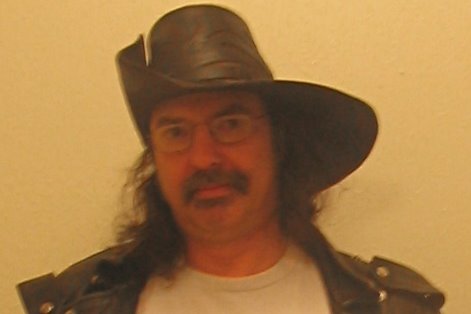 It is interesting for me to compare the heroes of Gemmell's worlds with main characters from another of my favorite authors, Steven Brust. Brust's series of books about his reluctant hero Vlad Taltos (assassin, witch, criminal boss, sorceror, psychic, human) and the Khaavren Romances set in the same world of Dragaera, have a very different style to Gemmell's work, but are similar in that they inhabit a consistent world over a long period of time, with the history in some books making reference to events from others, and a similar hint that this 'fantasy' world is simply in the future of our own.
Gemmell however has an unshaking belief in the ability of one man to sway a crowd of enemies, consistently his work shows single heroes standing off much larger groups due to their lack of fear and willingnes to die - which paradoxically guarantees their life.
Brust shows his heroes as far less effectual, for them the crowd will charge and not be stood off - the heroes will triumph through other means, often after an initial setback - usually through the bold application of their wits, or magic.
The difference may be put down to the backgrounds of the authors. Gemmell had a much more rough and ready youth, expelled from school for organising a gambling syndicate and working as a bouncer and then later a journalist. Brust is a musician and plays up his Hungarian descent, almost dressing as one of the characters from his books - he also likes poker. Gemmell was 6'4" tall and looked very much like one of his craggy heroes.
Anyway, as an aspiring writer, I like hearing where characters really come from, here is what Gemmell wrote in 1995 about the genesis of his Jon Shannow character for the Sipstrassi Series (emphasis mine):
Of the many characters I have created over the years, few have
captured the imagination of readers as powerfully as Jon Shannow, the Jerusalem Man.
Alan Fisher, the award winning author of 'Terioki Crossing', and a fan of the film Casablanca, has a phrase that sums up characters like Shannow. "They walk out of Rick's bar, fully formed and real. The author doesn't have to work on them at all. There is no concsious act of creation. One moment they don't exist- the next they stand before you, complete and ready."
I remember the moment Shannow walked out of Rick's bar. It was at the end of a miserable, wet day in Bournemouth at the start of autumn in 1986. I was the group managing editor of a series of newspapers stretching from Brighton to Portsmouth on the south coast. The previous week I had a call from my father to tell me that my mother was in hospiatl and that the surgeons feared she had terminal cancer. They were right. A year before she had suffered the amputation of her right leg, and fought back to make a dramatic entrance at the Christmas dance. This time there would be no fightback.
I had visited her in London, and then driven to Bournemouth for a business meeting, concluding it at around ten that night. I was staying in a small hotel of remarkable unfriendliness. The kind of place- as Jack Dee once said- where the Gideons leave a rope! I hadn't eaten since the previous evening and I called the night porter. He said the kitchen staff had gone home, but there was a plate of olives someone had left at the bar. Nursing the olives and a very large glass of Armagnac I returned to my room and opened the Olympia portable typewriter.
I was at the time preparing a Drenai novel, featuring the Nadir warlord Ulric, which my publishers had commissioned. According to the contract the book was to be called 'Wolf in Shadow' and was, lossely, a prequel to Legend. I had completed around sixty pages. They weren't good, but I was powering on as best I could.
Sitting by the window, looking out over Bournemouth's glistening streets, I tried to push the events of the week from my mind. My mother was dying, I was waiting to be fired, and staff, who had joined my team in good faith, were facing redundancy. After the fifth large Armagnac I decided to continue work on the book. I knew I was drunk, and I also knew that the chances of writing anything worthwhile were pretty negligible. But forcing my mind into a fantasy world seemed infintely more appealing than concentrating on the reality at hand.
The scene I was set to continue had a Nadir scout riding across the steppes. The intention was to follow him to the top of a hill and have him gaze down on the awesome army camped on the plains below. I focused on the typewriter keys and typed the following sentences...
'The rider paused at the crest of a wooded hill, and gazed down at the wide, rolling ampty lands beneath him. There was no sign of Jerusalem...'
The walls of the mind came crashing in as I typed the word 'Jerusalem,' thoughts, fears amd regrets spilling ver one another, fighting for space. There followed a bad hour, which even Armagnac could not ease. But after midnight I returned to the page and stared down at it. It called to me. Who is he, I thought? What is he looking for, the Jerusalem Man?
And suddenly he was there. Tall and gaunt, seeking a city that had ceased to exist three hundred years before. A lonely, tortured man on a quest with no ending, riding through a world of savagery and barbarism.
The story flowed in an instant, and I wrote until after the dawn. Through all the despair that followed in those next painful months I found a sanctuary in the company of Jon Shannow. Through his eyes I could see the world clearly, and understand how important it is to be strong in the broken places.
As a result Shannow will always be one of my favourite characters. For a while back here he was the best friend I'd ever had.
Here's to you David Gemmell, may you find the spiritual city that calls to you, and if you do, then save me a place at your table for a drink or two.
Tuesday, August 01, 2006
Ariel Atom - Nuclear Missile on Wheels
Speaking of great gear - this little car is one heck of a supercar, bearing in mind that it does seat two, is roadworthy and even has a (tiny) boot/trunk. The best bit is the price, around US$50k. See more at the Ariel Atom website.
Surely this car needs to be in the next James Bond movie? And if you're running a spy RPG you would have to also consider this little beast as a great getaway car for the heroes (or badguy).
Found via Signals vs Noise.
Surely this car needs to be in the next James Bond movie? And if you're running a spy RPG you would have to also consider this little beast as a great getaway car for the heroes (or badguy).
Found via Signals vs Noise.
Tuesday, July 11, 2006
Lego Robo Power!!!
Lumpley Games have a new (free) game called Mechaton up on their website. Now the problem with most tabletop mecha games is the scads of money you spend on buying miniatures (Battletech anyone?), or on unsatisfactory standup card versions of them.
The nice feature here is that they've got rules for making your mecha out of Lego. The abilities your mecha has are dependent upon how you build them. here are some examples:


Pics courtesy of Ninja Monkey J
Apart from the sheer genius of tapping into the combined geek-power of Lego and mecha wargaming, this game is also great because it allows easy customisation of mecha from the same set of parts, so puchase costs are minimal. In case you're wondering what kits you might be interested in, some basic research has shown me that some of the best kits are Exo-Force, Robo Platoon, and Robo Pod. You might also find Dino Pod, Mythical Creatures and Motion Power interesting for the walking and sundry bits.
My son is just getting into Lego now, and I would love to have a game we could play together, or that I could set up for a silly afternoon with a bunch of beer-toting mates.
By the way, for the ultimate in Lego mecha figures, go no further than NeutronBot.com, with Soren's models being the most mecha-like.
The nice feature here is that they've got rules for making your mecha out of Lego. The abilities your mecha has are dependent upon how you build them. here are some examples:


Pics courtesy of Ninja Monkey J
Apart from the sheer genius of tapping into the combined geek-power of Lego and mecha wargaming, this game is also great because it allows easy customisation of mecha from the same set of parts, so puchase costs are minimal. In case you're wondering what kits you might be interested in, some basic research has shown me that some of the best kits are Exo-Force, Robo Platoon, and Robo Pod. You might also find Dino Pod, Mythical Creatures and Motion Power interesting for the walking and sundry bits.
My son is just getting into Lego now, and I would love to have a game we could play together, or that I could set up for a silly afternoon with a bunch of beer-toting mates.
By the way, for the ultimate in Lego mecha figures, go no further than NeutronBot.com, with Soren's models being the most mecha-like.
Friday, July 07, 2006
The Iron Code
I've been re-reading my Druss the Legend books this week, somehow I'm missing Legend, which is the first one I read (and the first written). One of my favorite bits of prose is the Iron Code that Druss is taught by Shadak, one of his first mentors:
I love the uncompromising quality of that code, the assumption is not that all fights will be won, but that no fights will be shirked. I would be the first to say that sometimes discretion is the better part of valour, but that is something that does not fit in the simple black-and-white world of Druss.
However, author David Gemmell is not soft on Druss, he admits that the courage of a father that backs down from a fight to protect his family may well be greater than the man that allows his ego to lead him into confrontation. So the code provides a moral compass for a character that admits it is not the only way to live - in Druss' terms he would simply see one rule for himself and another for others with different needs. Seeing Gemmell handle Druss as a father figure would have been interesting, but as he is first introduced facing his death it would require an alternate timeline to work.
Hmmm ... I'll have to see whether Gemmell makes any of his other heroic figures fathers.
“Never violate a woman, nor harm a child. Do not lie, cheat or steal. These things are for lesser men. Protect the weak against the evil strong. And never allow thoughts of gain to lead you into the pursuit of evil. Never back away from an enemy. Either fight or surrender. It is not enough to say I will not be evil. Evil must be fought wherever it is found.”
I love the uncompromising quality of that code, the assumption is not that all fights will be won, but that no fights will be shirked. I would be the first to say that sometimes discretion is the better part of valour, but that is something that does not fit in the simple black-and-white world of Druss.
However, author David Gemmell is not soft on Druss, he admits that the courage of a father that backs down from a fight to protect his family may well be greater than the man that allows his ego to lead him into confrontation. So the code provides a moral compass for a character that admits it is not the only way to live - in Druss' terms he would simply see one rule for himself and another for others with different needs. Seeing Gemmell handle Druss as a father figure would have been interesting, but as he is first introduced facing his death it would require an alternate timeline to work.
Hmmm ... I'll have to see whether Gemmell makes any of his other heroic figures fathers.
Wednesday, June 28, 2006
Setting and Source Material
There is a great discussion about Setting and Source Material at the anyway blog. The most interesting bit for me was:
Now that is a cool tip. it basically fits the idea that Ron Edwards pushes for Setting, which is to take a leaf from the dramatic writing how-to's and determine your game's premise - i.e. the philosophical idea it is wrestling with.
Later in the comments Ninja J steps in to clarify his rules, and adds:
Sydney summarizes with:
This gives me some things to think about, I'm not sure what these should be for my own game, but I'm sure thinking about them will be more fruitful than working out yet another set of NPCs (and maps, and plot points, and ... etc) that my players never go anywhere near!
Last summer sometime Ninja J and I spent a whole afternoon walking all the heck over Northampton. Among many other things, we talked about a beloved old game he'd GMed; particularly, we talked about how rich and alive its setting was, how detailed. His players ate it up, he said, they'd go on and on about how compelling, complete, fully realized the setting was.
Then he told me how he'd done it. He'd taken three principles - I wish I could remember them in particular, J please step in here, but they were like "nobody thinks that they themselves are evil," "the Grand Galactic Empire is procedurally conservative," and "nobody really enjoys their job" - three principles something like those, and whenever any of his players asked him about anything in the setting, he'd simply apply those principles to create the answer.
Now that is a cool tip. it basically fits the idea that Ron Edwards pushes for Setting, which is to take a leaf from the dramatic writing how-to's and determine your game's premise - i.e. the philosophical idea it is wrestling with.
The punchline is: most RPGs' setting material (along with all primary source fiction, like Firefly or The Lord of the Rings) is the end product of a creative process. What do we roleplayers need? We need the starting point of the creative process instead.
Later in the comments Ninja J steps in to clarify his rules, and adds:
It's how I've run games ever since. Characters have motivations and anytime the protags do something, I ask myself what the NPCs would do in this situation, given their resources. Sometimes it's simple: "Queen Elizabeth's agents will never betray her because she's got something on them." "Jean-Renard is a coward and will funnel his resources into violence only as long as it will keep him out of danger." Along those lines.
I've found that you wind up with NPCs that seem really real because they're not prescripted. You have a world that seems real because, even when you don't know what's under every rock, you know the kind of thing that should be there.
Sydney summarizes with:
I'm really wondering now if the Technique we're trying to isolate from various specific instances actually involves combining
(1) seed crystals: highly specific, concrete, vividly visual images -- but with plenty of complexity and ambiguity to stimulate and allow growth in multiple directions [Angus: Characters, Ideas, Gadgets, Locations, Organisations]
(2) generation rules: simple, clear, abstract principles that guide how new specifics are derived from existing specifics.
This gives me some things to think about, I'm not sure what these should be for my own game, but I'm sure thinking about them will be more fruitful than working out yet another set of NPCs (and maps, and plot points, and ... etc) that my players never go anywhere near!
Subscribe to:
Posts (Atom)